






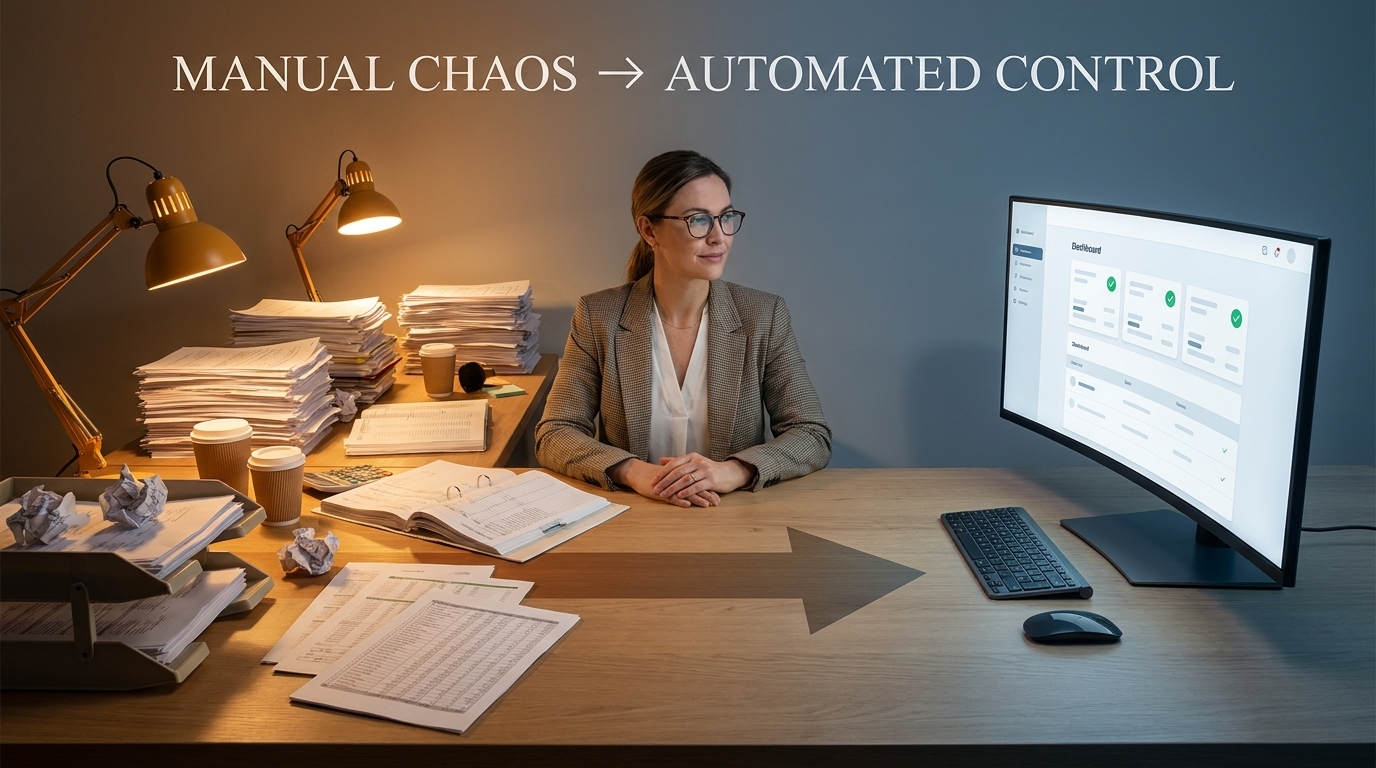

Employee expense management can quickly become a bottleneck when businesses rely on paper receipts, spreadsheets, email approvals, and manual reimbursements. Automating employee expense management helps organizations reduce processing time, improve financial visibility, strengthen compliance, and create a smoother experience for employees and finance teams. For businesses operating across Malaysia, Singapore, and the wider APAC region, automation has become a practical necessity rather than a future initiative.
What is employee expense management?
Employee expense management is the process of tracking, reviewing, approving, reimbursing, and reporting business expenses incurred by employees. These expenses may include travel, meals, client entertainment, training, accommodation, mileage, and remote work costs.
A complete expense management program involves multiple stakeholders:
- Employees who submit expenses
- Managers who approve claims
- Finance teams who verify and reimburse expenses
- Business owners and executives who monitor spending
While many organizations view expense management as an administrative function, it is fundamentally a financial control process. Effective expense management improves visibility into spending patterns, reduces financial leakage, and supports stronger decision-making across the business.
As finance teams increasingly adopt digital transformation initiatives, employee expense management is often one of the first processes selected for automation because it delivers measurable efficiency gains with relatively low implementation complexity. Organizations exploring broader finance transformation can see similar benefits in automated bookkeeping and modern AI-powered bookkeeping workflows.
Why employee expense management matters more than ever
Poor expense management affects more than reimbursement timelines. It can create hidden operational costs that accumulate across the organization.
Financial visibility and spend control
Without a structured process, finance teams often struggle to understand where money is being spent, which departments are overspending, and whether expenses align with company policies.
Automated expense management provides real-time visibility into spending trends, enabling leaders to identify issues before they become budget problems.
Faster reimbursement cycles
Employees expect prompt reimbursement for legitimate business expenses. Long reimbursement delays can negatively affect employee satisfaction and create unnecessary friction between teams.
Automation helps accelerate approvals and reduces manual intervention throughout the reimbursement process.
Better compliance and audit readiness
Organizations operating in regulated environments must maintain accurate records and supporting documentation. Automated systems help standardize record keeping and create audit trails that are easier to manage than paper-based processes.
Reduced fraud and policy violations
Duplicate claims, missing receipts, unauthorized purchases, and policy exceptions can be difficult to identify manually. Automated controls help reduce these risks by enforcing approval workflows and validating submissions before payment.
How the employee expense management process works
Most organizations follow a similar expense management workflow.
| Stage | Owner | Objective |
| Expense Creation | Employee | Business expense occurs |
| Submission | Employee | Submit receipts and details |
| Approval | Manager | Validate business purpose |
| Verification | Finance Team | Check policy compliance |
| Reimbursement | Finance Team | Process payment |
| Reporting | Finance Leadership | Analyze spending trends |
Step 1: Expense occurs
An employee incurs a business-related expense, such as booking a flight, purchasing software, or attending a client meeting.
Step 2: Expense submission
The employee submits receipts, invoices, and supporting documentation.
Many businesses now use mobile apps with OCR technology to capture receipts instantly. Understanding the capabilities of invoice recognition software and a comprehensive guide to OCR technology can help finance teams reduce manual data entry and improve accuracy.
Step 3: Manager approval
Managers review claims against company policies and spending limits.
Approval workflows are critical because they establish accountability before expenses reach the finance team. Organizations implementing formal controls often use an invoice approval matrix to ensure consistent decision-making.
Step 4: Finance verification
Finance personnel verify supporting documentation, check compliance requirements, and ensure coding accuracy.
Step 5: Reimbursement and reporting
Approved claims are reimbursed and recorded within accounting systems, creating valuable reporting data for future analysis.
Common employee expense categories companies should reimburse
Although policies vary between organizations, most businesses reimburse expenses across several standard categories.
| Category | Examples | Typical Controls |
| Travel | Flights, taxis, hotels | Spending limits |
| Meals | Client meetings | Receipt required |
| Mileage | Personal vehicle use | Mileage policy |
| Training | Courses, certifications | Pre-approval |
| Remote Work | Internet, equipment | Budget caps |
| Client Expenses | Entertainment and events | Manager approval |
Travel and transportation
Travel-related expenses remain among the most common employee claims, particularly for sales teams, consultants, and regional managers.
Meals and client entertainment
Organizations should clearly define reimbursement rules for meals and entertainment to ensure consistency and prevent disputes.
Professional development
Training programs, certifications, conferences, and workshops often qualify for reimbursement when aligned with business objectives.
Remote and hybrid work expenses
As hybrid work models become more common across APAC, organizations increasingly include internet, communication, and equipment expenses within reimbursement policies.
The biggest challenges in employee expense management
Many organizations believe technology is their biggest challenge. In reality, process issues often create greater inefficiencies.
1. Lost receipts
Paper receipts remain one of the most common sources of expense processing delays.
2. Slow approvals
Manual email chains frequently create bottlenecks that extend reimbursement cycles.
3. Duplicate claims
Without automated validation, duplicate submissions can go unnoticed.
4. Policy violations
Employees may unknowingly submit expenses that fall outside policy guidelines.
5. Manual data entry
Finance teams often spend significant time entering information from receipts into accounting systems. Solutions that support automated invoice processing can significantly reduce repetitive administrative work.
How to create an effective expense management policy
Technology alone cannot solve expense management challenges. Every successful automation initiative starts with a well-defined policy.
An expense policy establishes spending rules, documentation requirements, approval authority, and reimbursement procedures.
1. Define eligible expenses
Clearly specify which expenses qualify for reimbursement and which do not.
2. Set spending thresholds
Different expense categories should have appropriate spending limits based on business needs.
3. Create documentation requirements
Specify receipt requirements, supporting documents, and submission standards.
4. Build approval hierarchies
An approval matrix ensures claims are reviewed by the appropriate individuals based on value, department, or risk level. Businesses that need more advanced governance can implement structured approval workflow software to automate routing and escalation.
5. Establish submission deadlines
Consistent deadlines improve reporting accuracy and cash flow management.
Employee expense management compliance in Malaysia
Organizations operating in Malaysia should maintain complete supporting documentation and establish processes that support audit readiness.
Documentation best practices
Expense claims should include clear receipts, invoices, and supporting explanations where required.
Record retention
Businesses should retain records according to applicable regulatory and tax requirements. Organizations should verify current compliance requirements with the relevant authorities.
LHDN audit preparedness
Maintaining organized digital records helps reduce administrative burdens during audits and compliance reviews. Businesses can strengthen their processes by following guidance on how to keep business receipts safe and valid for audits.
Many Malaysian businesses are also integrating expense management with broader e-Invoicing initiatives. Understanding Malaysia e-Invoicing requirements can help organizations align expense documentation with wider compliance efforts.
Receipt management challenges
Paper receipts can fade, become damaged, or be misplaced. Digital document capture provides a more reliable long-term approach to record retention.
Employee expense management compliance in Singapore
Singapore organizations face similar challenges around documentation, governance, and financial controls.
Documentation standards
Supporting documents should clearly demonstrate the business purpose of expenses and comply with internal policies.
GST considerations
Organizations should maintain sufficient documentation to support GST-related claims and reporting where applicable.
Record keeping requirements
Accurate digital records improve accessibility and reduce compliance risks.
Internal control expectations
Strong approval workflows, segregation of duties, and audit trails remain important elements of effective expense governance.
Best practices for modern employee expense management
Leading organizations combine process improvements with technology to achieve sustainable efficiency gains.
Automate receipt capture
Mobile receipt capture eliminates many manual data entry tasks and reduces the risk of lost documentation.
Use OCR and AI extraction
Modern OCR and AI technologies can automatically extract expense details from receipts and invoices, reducing administrative workload while improving accuracy. Businesses evaluating this approach may find value in understanding AI document capture and workflow automation.
Implement approval workflows
Automated approval routing ensures claims move quickly through the organization while maintaining appropriate controls.
Integrate finance systems
Integration with accounting platforms helps eliminate duplicate data entry and improves reporting consistency. For organizations already using cloud accounting software, seamless connections with Xero and QuickBooks can further streamline operations.
Monitor key performance indicators
Track metrics such as:
- Average reimbursement time
- Approval turnaround time
- Policy compliance rates
- Processing costs per claim
- Exception rates
Conduct regular audits
Periodic reviews help identify process weaknesses and strengthen financial controls.
How expense management software improves finance operations
Automation transforms expense management from a reactive administrative process into a strategic finance function.
| Manual Process | Automated Process |
| Spreadsheet tracking | Centralized platform |
| Manual entry | OCR extraction |
| Email approvals | Automated workflows |
| Delayed reporting | Real-time dashboards |
| Higher error rates | Improved accuracy |
Modern expense management solutions can provide:
- Automated receipt capture
- AI-powered validation
- Approval automation
- Policy enforcement
- Real-time reporting
- Audit trails
- Accounting integrations
Organizations evaluating automation solutions should prioritize systems that integrate smoothly with existing finance infrastructure. Businesses interested in a broader view of finance automation may also benefit from exploring how AI changes accounting operations and how automation supports business growth.
How to choose employee expense management software
The best expense management solution is not necessarily the one with the longest feature list. It is the solution that aligns with your workflows, compliance requirements, and growth objectives.
| Feature | Why It Matters |
| OCR | Faster processing |
| Mobile App | Better user adoption |
| Approval Workflow | Stronger governance |
| Xero Integration | Consistent accounting data |
| QuickBooks Integration | Reduced manual work |
| Reporting | Better visibility |
| Audit Trail | Compliance support |
For SMEs
Prioritize ease of implementation, affordability, and user adoption.
For growing businesses
Focus on workflow automation, integration capabilities, and scalability.
For regional organizations
Look for multi-entity support, standardized controls, and centralized reporting.
Building an AI-ready finance operation
Employee expense management is no longer just about processing claims efficiently. It is increasingly connected to broader finance transformation initiatives that improve visibility, compliance, and operational performance. Organizations that automate expense workflows gain more than faster reimbursements. They create structured financial data that supports better decision-making, stronger controls, and future AI adoption.
As businesses across Malaysia, Singapore, and the wider APAC region modernize their finance operations, expense management often becomes one of the most practical starting points. Combined with AI-powered bookkeeping, automated document processing, intelligent approval workflows, and integrations with platforms such as Xero and QuickBooks, automated expense management can help finance teams operate with greater speed and confidence.
Organizations evaluating their next phase of finance automation can explore how Assist’s features and benefits support document processing, workflow automation, and accounting integration. Additional insights can be found through Assist’s case studies and educational resources available on the Assist blog.
If your organization is assessing how prepared its finance infrastructure is for AI-driven operations, consider speaking with an infrastructure specialist about AI readiness and digital finance transformation: https://app.assist.biz/auth/register.